CHAPTER 01I know what the bottom looks like
Not as a concept. Not as something I read about or watched someone else go through. I lived there. I was there long enough to know every corner of it.
My father left the country when I was in seventh grade. He told me I was a big kid and could take care of myself now. I loved him, and it was one of the hardest things I went through as a child. My mother raised my brother and me on her own, working 12-hour shifts to keep a roof over our heads and food on the table. There was nothing extra.
With the discipline and the supervision gone, I went astray and got into trouble. I was pushed through high school without actually learning the basics: reading, writing, math. I tried college once and failed. By 21, my self-esteem was at zero, and I didn't know how to ask for help because I didn't think help was something I deserved.
I wasn't going anywhere. And some part of me had started to accept that.
CHAPTER 02One sentence
My father came back once, to see me as a young, troubled adult at one of the lowest points of my life. One visit. One conversation. He didn't give me a speech or a plan. He said one thing:
“If you want to come out of the situation you're in, there's only one thing you can do. Get your education.”
That was it. No roadmap. No guarantee. Just a direction, from a man who had been gone most of my life, showing up exactly when I needed him to.
I didn't believe I could do it. But I hated where I was so much that I was willing to try again, and this time I was going to put every single thing I had into it. Not because I was confident. Because I had nothing left to lose.
CHAPTER 03Starting from zero. Literally.
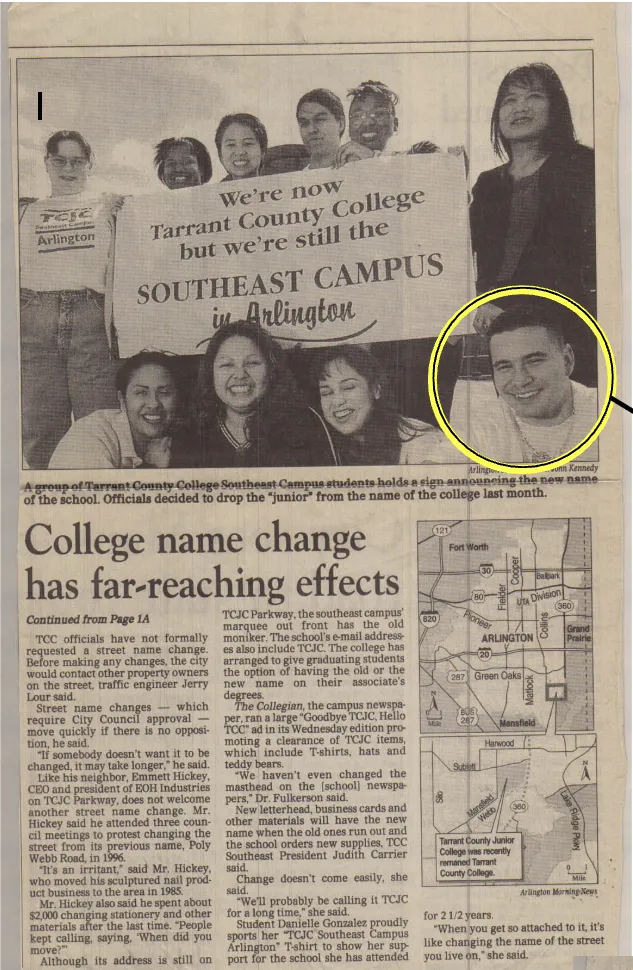
When I enrolled at Tarrant County College, I was placed into remedial courses across the board. Math. English. The fundamentals. The only class I took that first semester that counted toward a real college credit was P.E.
I had to learn how to learn. How to study. How to read something and actually understand it. These were the building blocks everyone around me had already built on, and I was laying them for the first time as a young adult, sitting in a classroom feeling completely out of place.
The first semester was hard. The second was harder. But I didn't stop. I lived in the Student Learning Center. I camped out in the library to practice what I was being taught. I sought help from professors, counselors and anyone I could find when the tutoring center was closed. I was so scared of failing that if I wasn't sleeping, I was at that college fighting to make it.
Something happened that I didn't expect: the people helping me started to encourage me. That encouragement was a spark, and I had been cold for a long time, so I held onto it. By the end of my second real semester, I passed all 12 credit hours. Every single one. It was the first real proof I had ever had that I was capable of more than I had been told.
CHAPTER 04From remedial to remarkable
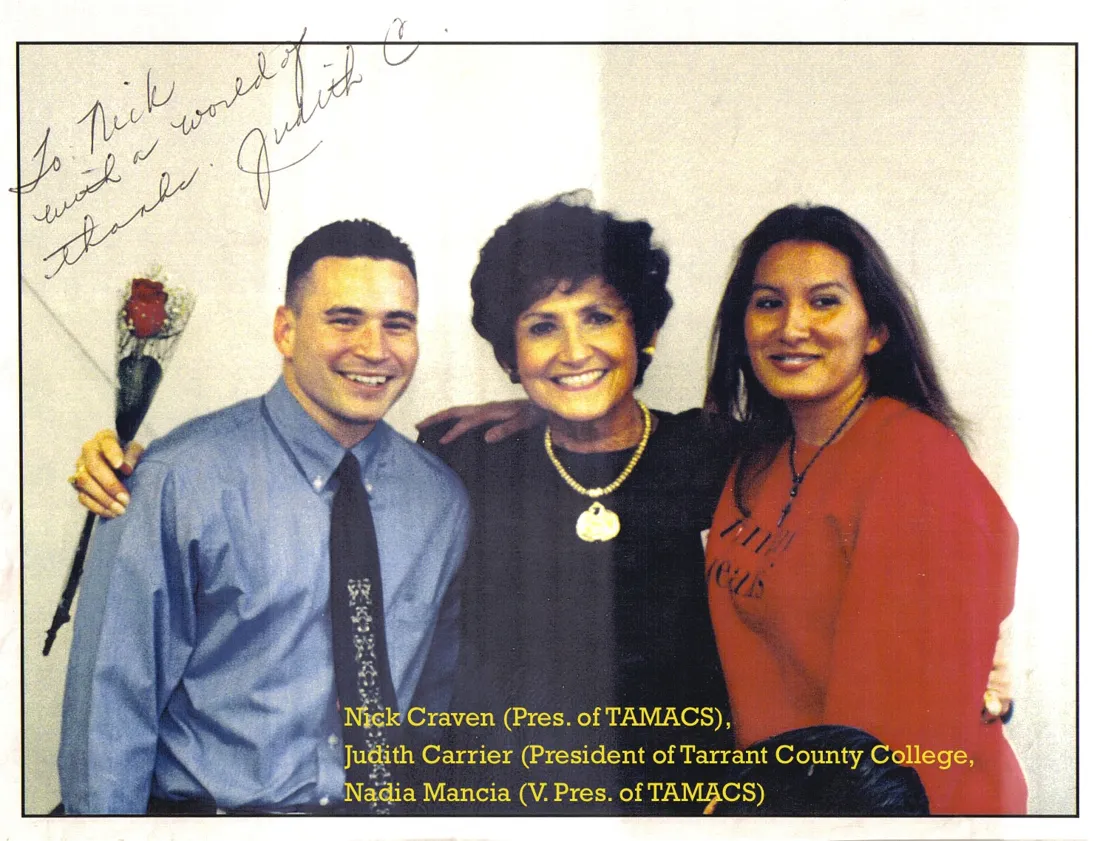
By the time I finished at TCC two and a half years later, I had immersed myself in every part of that college. I joined the Student Ambassador Club and the Asian, Black and Latin American student organizations, and I surrounded myself with students who were doing well because I wanted to do well too. I joined T.A.M.A.C.S., the Texas Association of Mexican-American College Students, and served as Service Outreach Chairman, then Secretary, then President.
We ran canned food and clothing drives for Hurricane Mitch victims in Honduras, raised money for Adopt an Angel and Bowl for Kids' Sake to keep kids off the streets, and sent 26 students to a leadership conference at Tarleton State University.
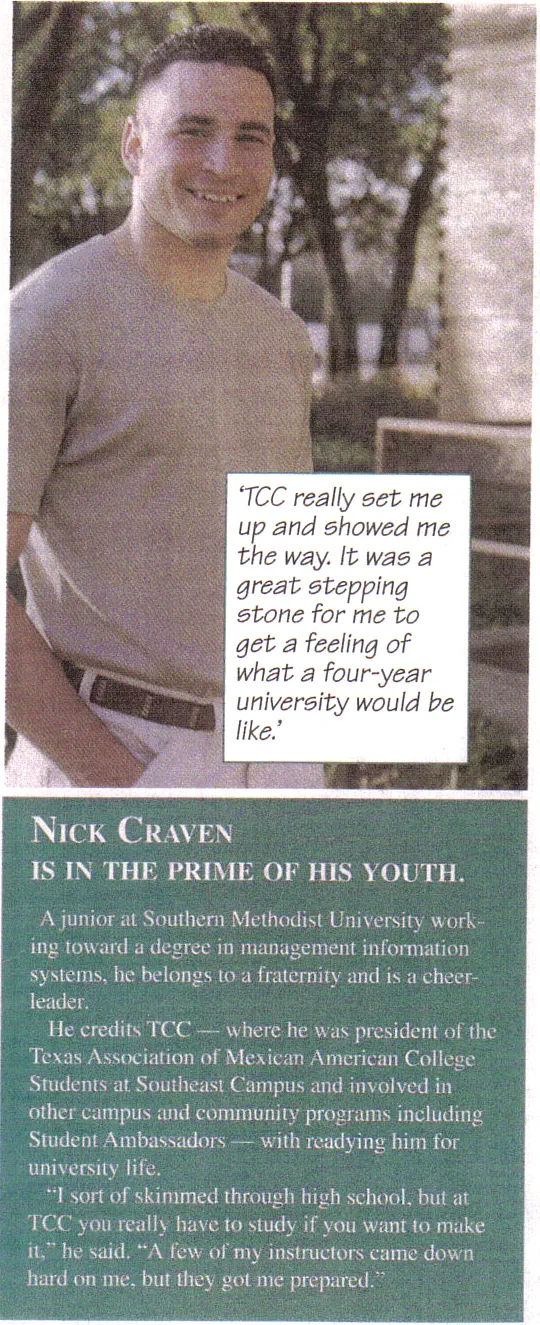
I graduated with Honors and Distinction. I was inducted into Phi Theta Kappa and received the Spirit of Southeast Award, the Exceptional Leadership Award and the President's Award for Most Outstanding Community Service. TCC featured me in its catalog as a student success story.
I had kept my head down and kept moving forward. When I finally looked up, I was walking across the stage. A counselor helped me apply to five universities. I was accepted to all five, and Southern Methodist University offered me close to a full scholarship. I jumped at it.
CHAPTER 05The arena that built me
At SMU, I knew I would have to buckle down the same way I had at TCC, and that I needed to surround myself with people who were succeeding. I stumbled into some male cheerleaders on campus. A conversation turned into an invitation, and I joined the team.
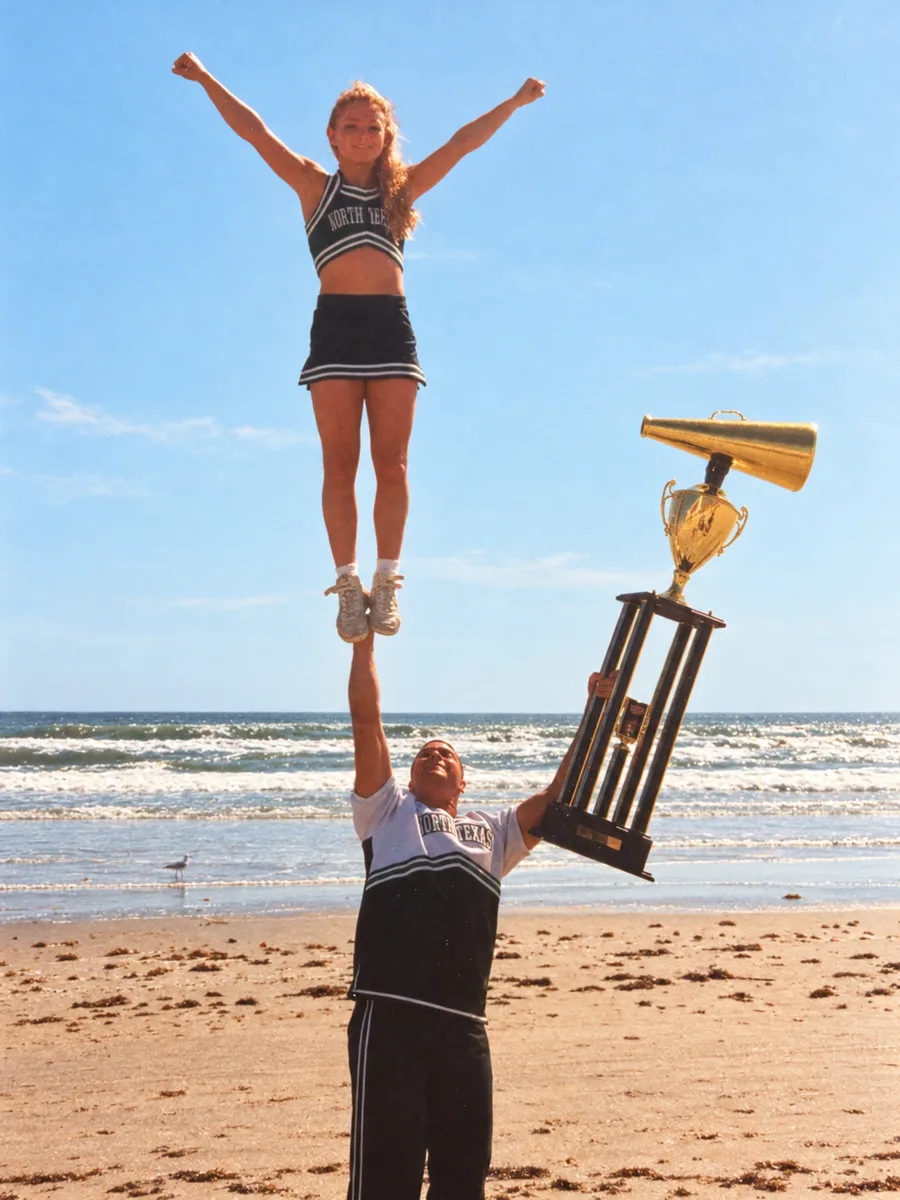
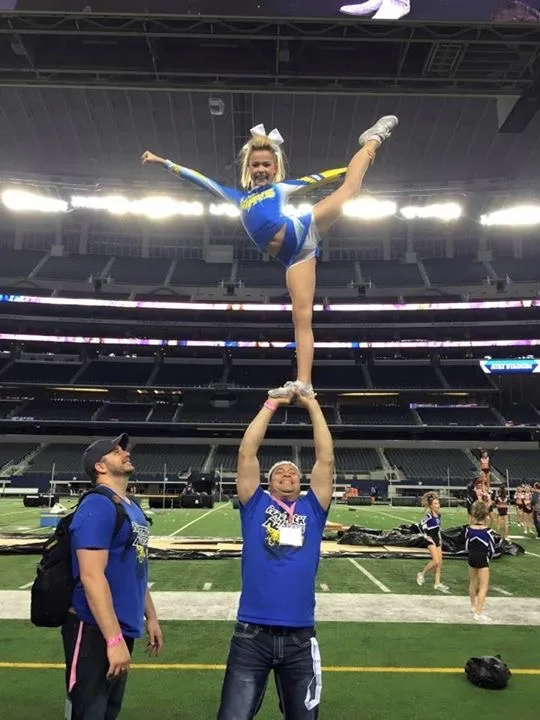
For people who've never competed at that level, the word “cheerleading” doesn't capture it. It's strength, timing and trust, performing flawlessly under pressure in front of thousands of people, knowing a single lapse in focus could hurt someone. It demands the same things building a company demands. I fell in love with it, and with dedication and hard work I went from zero experience to elite tumbling and stunting.
The University of North Texas recruited me, and I worked toward a second degree there while finishing at SMU. In April 2002, our UNT squad won the NCA Division IA Collegiate National Championship, broadcast on CBS Sports. That same year I graduated from SMU with a Bachelor of Arts in International Studies.
Talent shows up early. Commitment shows up when it's hard.
The people who win at the highest level aren't always the most talented. They're the ones who commit most completely, when they're tired and not sure it's working. That's when the gap opens.


CHAPTER 06Building for others, starting with kids
Here's what nobody tells you when you grow up in a tough environment: you spend years trying to climb out. Then one day you look around and realize you're out, and your instinct isn't to celebrate. It's to turn around and reach back.
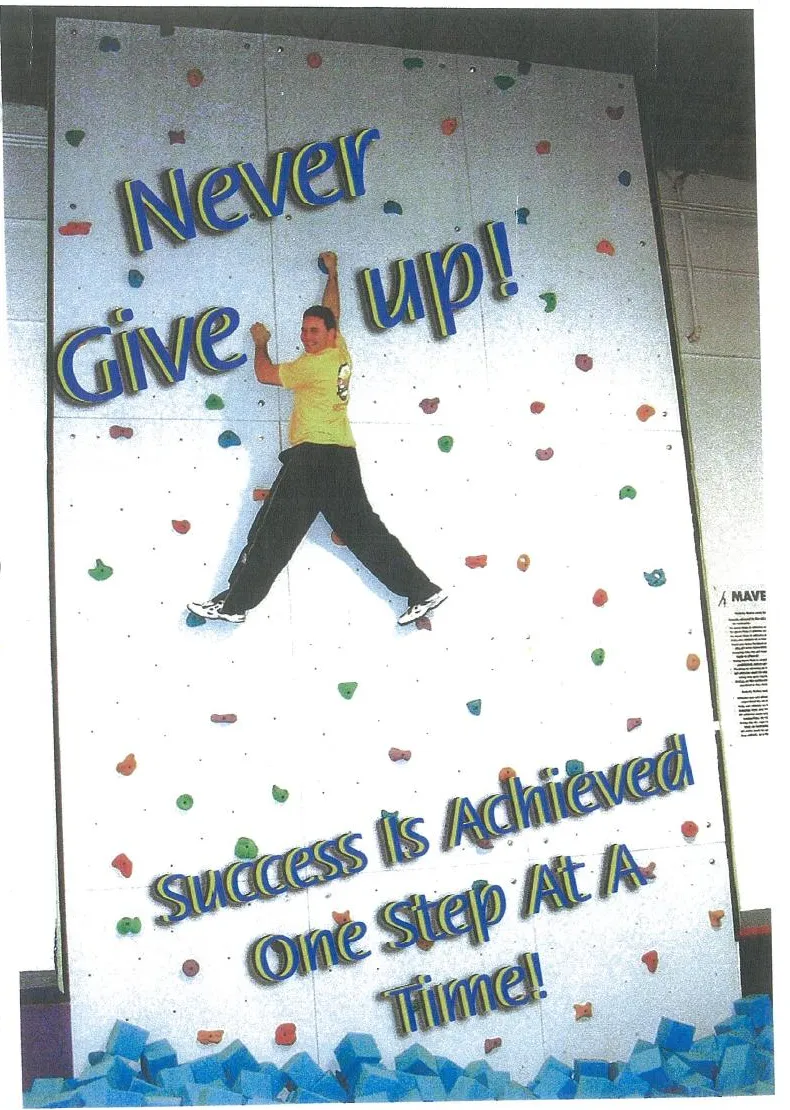
That's why I wanted to open a kids' gym. I was one of those kids who needed someone to pull them up. I wanted to build a place that built kids from the inside out, one that gave them the self-esteem to press forward because success is on the other side of hard work.
I tried it the first time and failed. Had to shut it down. But I already knew the difference between a failure and a verdict.
A failure means you did it wrong. A verdict means it's over.
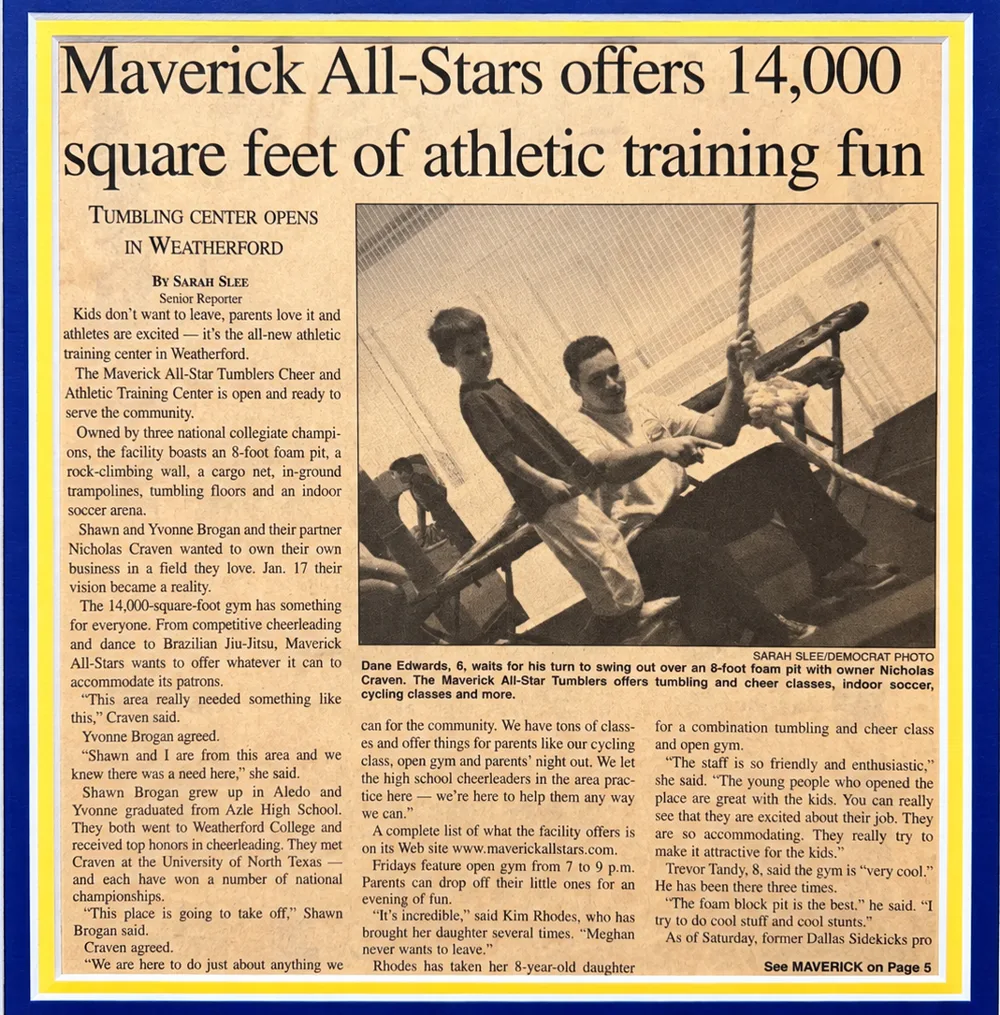
I spent most of 2003 writing the business plan and building out a 14,000-square-foot facility in Weatherford, Texas, with my business partner. We went to eight banks. All eight said no. The ninth was Texas Bank, where Martin Talley believed in us and gave us the chance we needed. Maverick All-Star Tumblers opened on January 17, 2004.
By month two we were profitable. By month nine, 850 students were enrolled. We grew to more than 1,000 kids a week, from 18 months old to college level, with 40 coaches and staff. We won national titles with teams we trained from scratch and took fourth place at the All-Star Cheerleading Worlds. We later opened Jump X-treme (2007) and Indoor Sports (2009) right next door: three facilities side by side, about 40,000 square feet built for kids. Over the years I raised more than $4.4 million in SBA-backed financing to build it all.
Inside that gym we built a nonprofit booster club that paid for kids who couldn't afford to participate. Kids who needed exactly what I had needed at their age: a door that was open for them even when the cost said otherwise. That wasn't charity. That was mission.
I sold Maverick in May 2016.
CHAPTER 07Scaling up: the commercial chapter
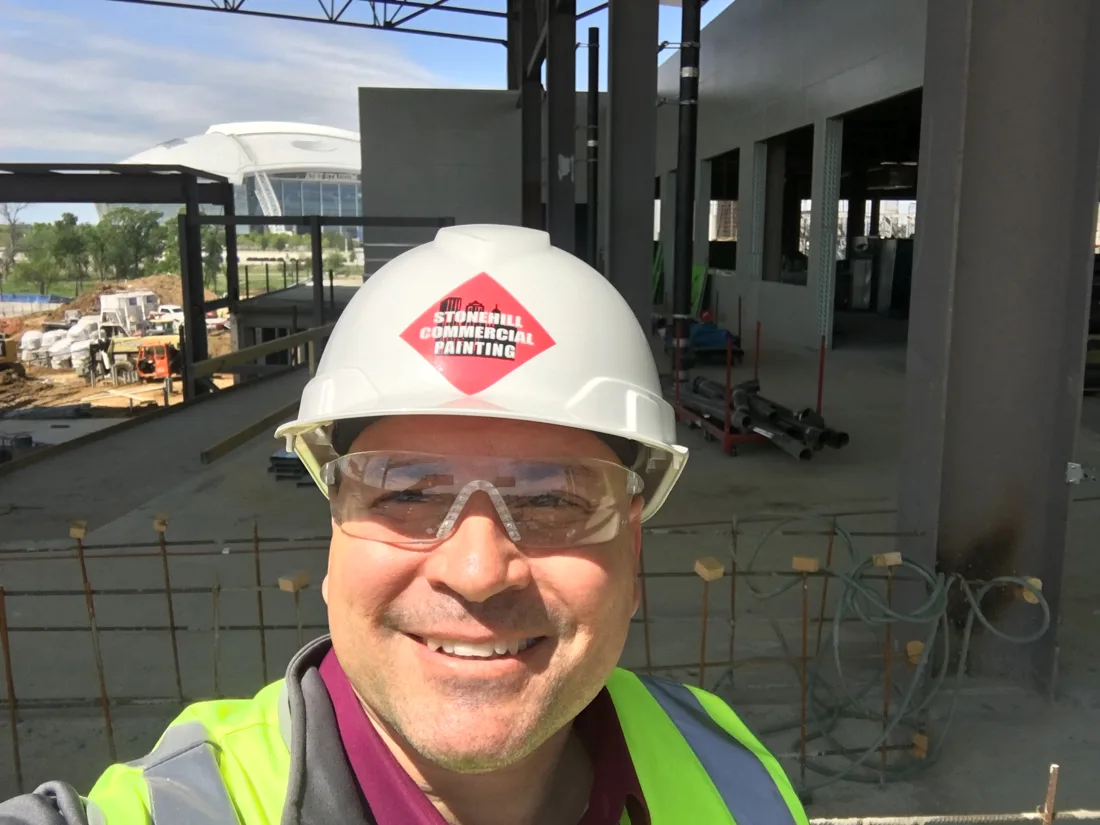
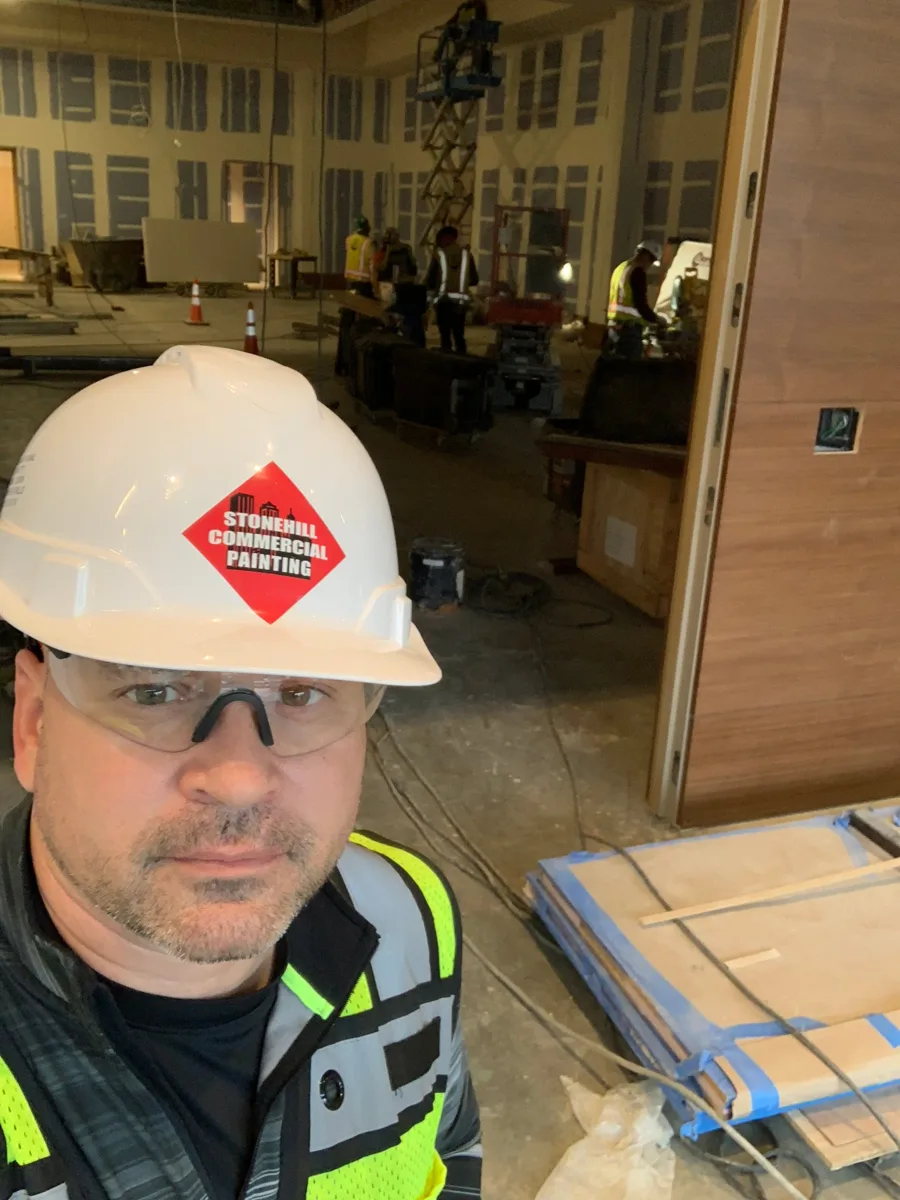
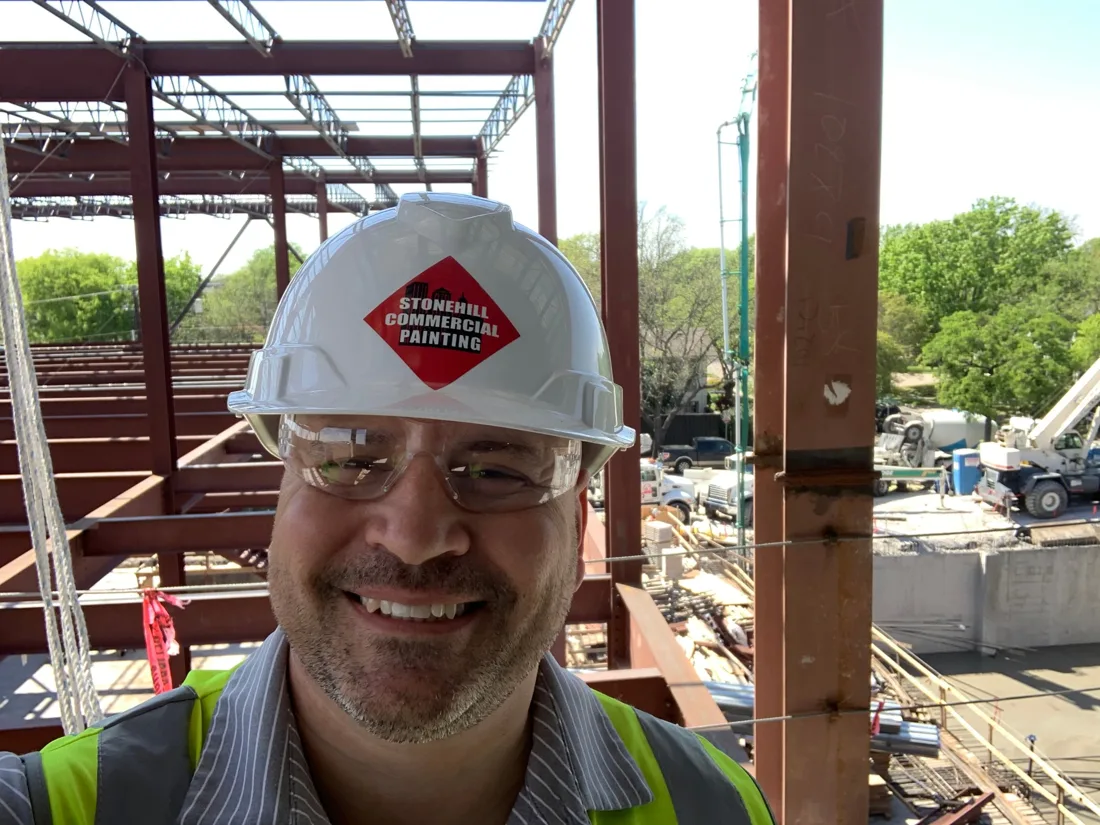
After the sale, I stepped into real estate and commercial construction. As project manager for Stonehill Commercial Painting, I ran painting, wall covering, taping and texturing scopes under general contractors Manhattan Construction and Austin Commercial, with a project engineer, four supervisors, 24 foremen and more than 100 painters working across job sites.
The projects were a different order of magnitude: the $250 million Texas Live! entertainment district and the $150 million Live! by Loews hotel in Arlington, the $115 million Westin Irving Convention Center Hotel, The View of Fort Worth's 300 apartments, and the Highland Park High School addition. More than $580 million of construction, with hundreds of moving parts and timelines that didn't bend.
That environment sharpened something the gym years had started: at scale, systems are everything. It's not about working harder. It's about building the infrastructure that makes the right things happen reliably, without depending on any single person, including yourself, to hold it all together.
I had planned to go to law school, and a county attorney wrote me a recommendation. I took the construction job instead, and it led me somewhere else.
CHAPTER 08Back on my own terms
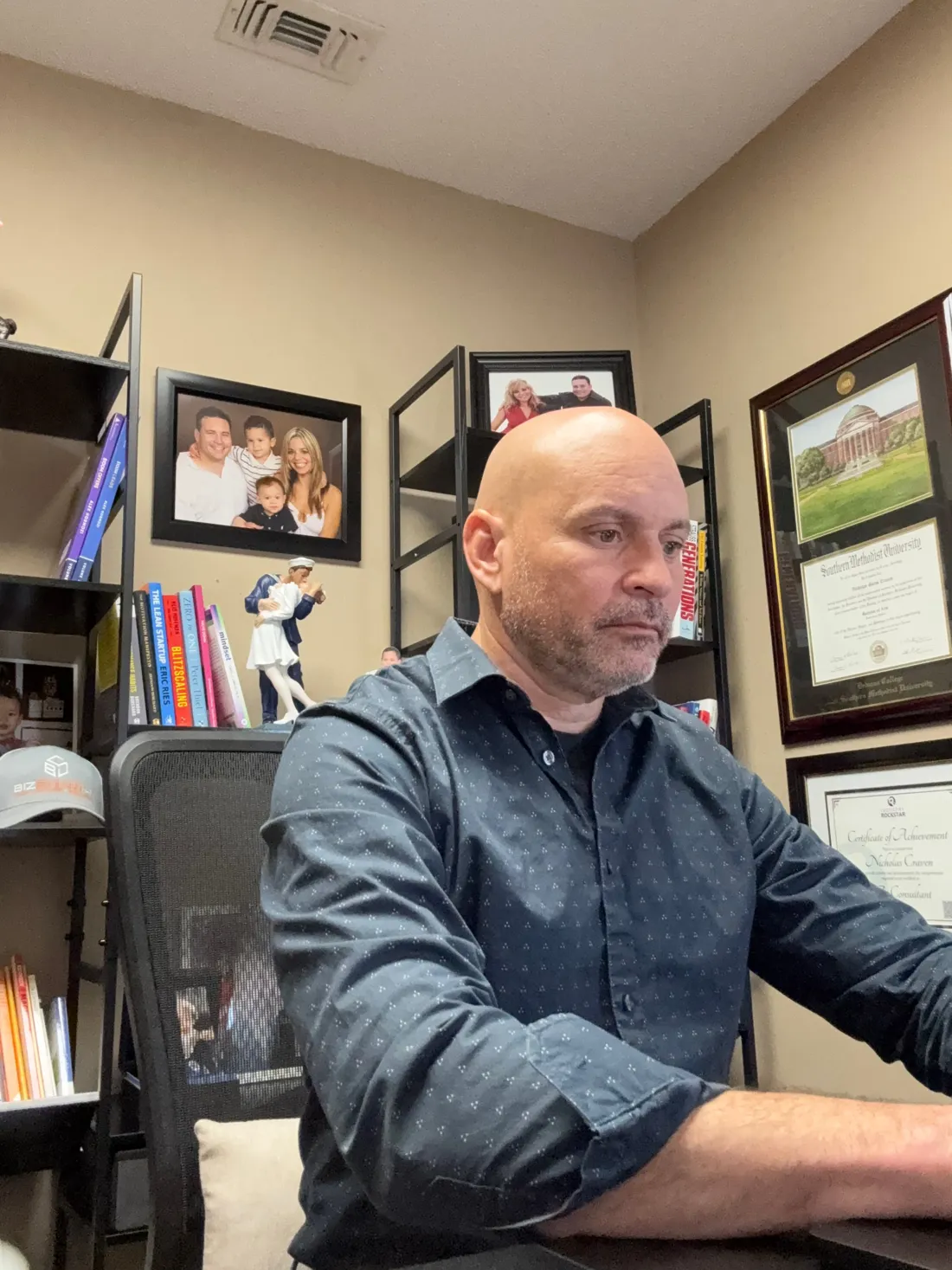
In 2018 I founded AIX Group, LLC, a holding company for my marketing agency, my construction company, AIX Builders, and my real estate investments. In the first two years our crews completely renovated more than 40 properties, from gutted to final finishes. Built fast. Built right. I bought, financed and sold them end to end: hard-money acquisitions, refinances into long-term loans, and owner financing to the families who bought them.
But underneath, I kept seeing the same problem everywhere: businesses, including mine, were run by their founders' bandwidth instead of by systems. People worked incredibly hard and still left opportunity on the table because they didn't have the infrastructure to break free from the daily grind.
I had been that person. I knew the cost. I just didn't have the tools yet to solve it at scale.
CHAPTER 09The pivot that changed everything
In 2019 I came under the coaching of Russell Brunson, the founder of ClickFunnels, and it cracked something open. For the first time I was studying why certain ideas reach people and others don't, and how to build a message and a system that does the work when you're not in the room.
That led me into marketing systems, then technology systems. Then, in November 2022, ChatGPT reached the mainstream, and I found myself fully immersed in AI, data science and business analytics.
Once I understood what AI could actually do in the real world, not the hype but the actual capability, I couldn't look at any business problem the same way again. Every friction point I had seen in every business I had built now had an answer. The question wasn't whether to engage. It was how fast I could go.
CHAPTER 10The architecture I'm building now
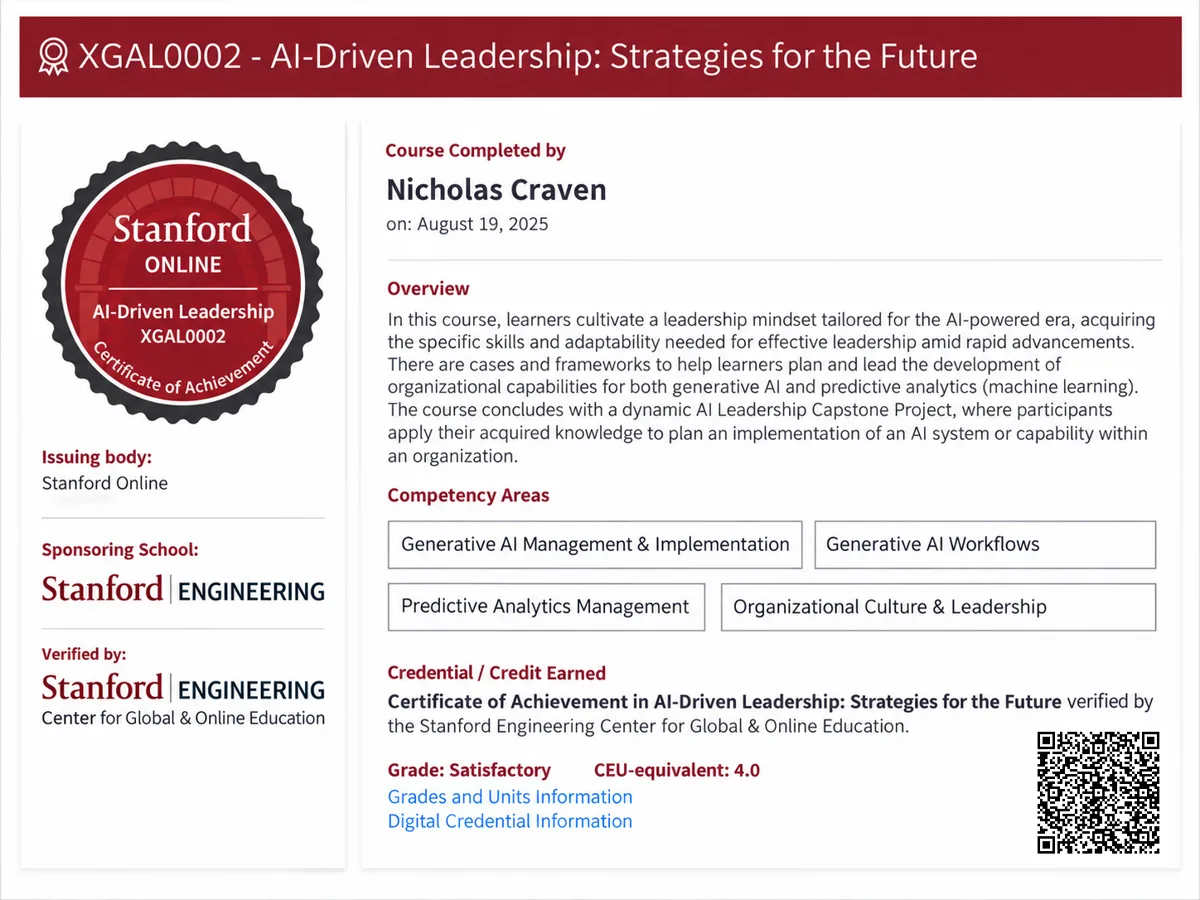
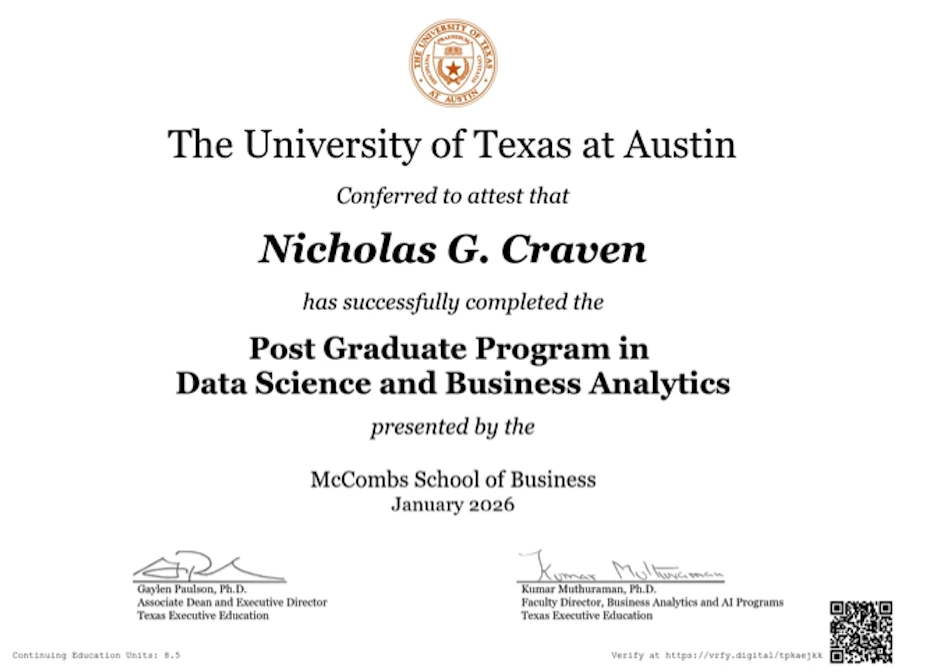
In August 2025 I completed Stanford Online's AI-Driven Leadership program, and in January 2026 I completed the Post Graduate Program in Data Science and Business Analytics at the University of Texas at Austin's McCombs School of Business. Those credentials formalized what I had been building toward for years: a deep foundation in the data layer that makes AI work in the real world.
Today AIX Group is a holding company for AI consulting, healthcare technology and venture development. Each venture under it is a standalone brand solving one problem for one kind of person, with AI as the foundation rather than an afterthought. Underneath all of it, I'm building a C-suite of AI agents that lets these businesses run and scale without the founder becoming the ceiling.
CHAPTER 11The one thread
Trace a line through everything: the remedial classroom, the national championship, the gym in Weatherford, the commercial builds, the real estate, the AI companies. One thread runs through all of it.
I've always gone after what moves me. I've never settled for something I didn't believe in. And I've never forgotten what it felt like to be stuck, in life or in business, which is exactly why I'm so passionate about helping others get unstuck.
It started with kids in a gym. Now it's clinic owners who need to grow without burning out, business owners who need systems instead of stress, and people who want to learn AI without a computer science degree.
My venue changed. My mission hasn't.
A man showed up once, at the worst moment of my life, and said the right thing. One sentence. My job now is to be that person for others: not with one sentence, but with systems, tools, knowledge, and the lived proof that the distance between where you are and where you want to be is almost always shorter than it looks, if you commit fully and refuse to quit.
— Nick Craven